Contemporary Styles Voice Class is open to all students regardless of music background and will focus on singing techniques utilized in contemporary music. Students will develop healthy techniques for breathing and vocalizing in the three core singing techniques used in all contemporary genres: belt, mix, and legit. Students will choose their own repertoire from any style, including but not limited to: pop, jazz, rock, blues, country, R&B, gospel, contemporary music theater, hip hop, etc. Offered annually in the spring. Counts toward musical theater concentration.
Musical Theater Concentration
The Musical Theater concentration is open to all majors in the Bachelor of Arts program. Musical theater is an interdisciplinary art form that is culturally relevant by offering opportunities for discourse and dialogue on social issues, societal change and culture through its performance. This genre of theater has deep roots in American culture and is wildly popular offering ample, consistent, and financially supported professional opportunities for those who wish to have careers as artists. The rise in popularity of musical theater has also extended over to film and television.
Classes Applicable to Musical Theater
There are several courses applicable to Musical Theater concentrators, including those listed (right). Students may also take three semesters of private voice lessons; contact Lisa McDermott in the Music Office for more details. A complete course list for Musical Theater can be found on the Registrar’s website. Students are welcome to talk with Dr. Marita Stryker in addition to their advisor regarding course selection.
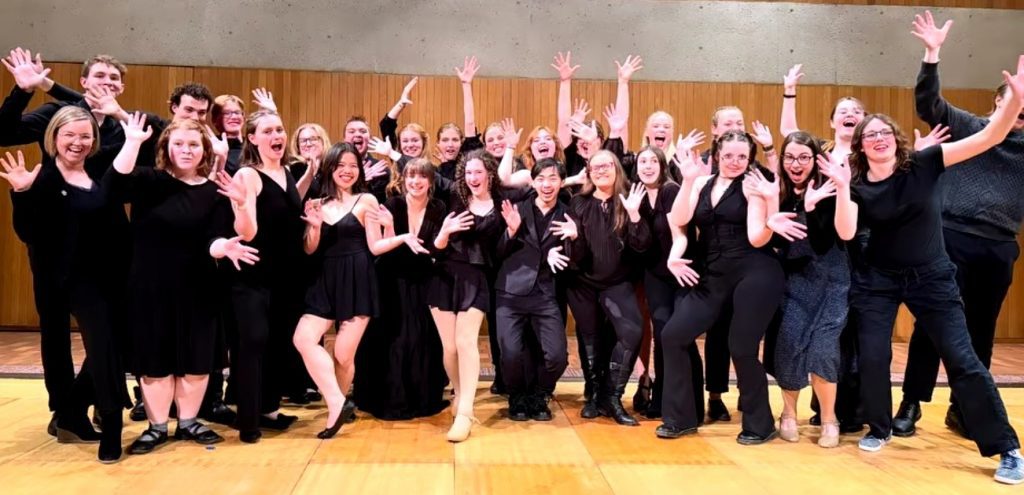
Musical Theater students are also encouraged to audition for the Musical Theater Lab, the newest Music Department ensemble. Contact Dr. Stryker about auditions.
This studio course focuses on advanced techniques of acting and singing for the musical stage with emphasis on opera. Students explore voice, movement, improvisation, and characterization at an advanced level. Participants receive coaching in musical and dramatic style through solo and small ensemble literature and prepare scenes for class performance. The course culminates with public performances of a fully staged and costumed lyric theater work. May be repeated once. A production fee will be charged to all students participating in the production. Offered annually in the fall semester. Counts toward musical theater concentration.
Prerequisites: two semesters of voice study or permission of instructor.
This course is designed for students interested in civic engagement in the arts and arts fusion projects. Participants mentor students from a local elementary school in an Opera Creation Residency as the elementary students compose and perform their own original works. The course culminates in staged public performances. Enrollment is subject to a fall interview/audition. Open to all students. May be repeated once. A class fee may be required. Offered during January Term in alternate years. Counts toward musical theater concentration.
Prerequisites: two semesters of voice study or permission of instructor.
Participants prepare for performance of a one-act opera or opera scenes. Students receive coaching and performance experience through individual and group singing/acting exercises. The course culminates with staged and costumed public performances. Open to all students. May be repeated once. A class fee may be required. Offered periodically during January Term. Counts toward musical theater concentration.
Prerequisites: two semesters of voice study or permission of instructor.
How does a musician find work with little or no prior professional experience? What skills do musicians need to refine before and after graduation? This course invites students to engage in self-reflection, topical discussions, capacity-building, and best professional practices for individual musicians in the performance industry. Topics include the basics of the music business (roles in the industry, copyright law and contracts), artist identity development, and practical skills for a musical career. Offered alternate years in the fall.
Drawing from the fields of biology, neuroscience, psychology, and sociology, this course offers a deep dive into the psychology of music performance anxiety. Students develop an understanding of (1) the sympathetic and parasympathetic nervous systems, (2) causes, triggers, and symptoms of music performance anxiety, and (3) the current state of music performance anxiety research including prevention, intervention, and treatment protocols. Students complete a literature survey examining both quantitative and qualitative research on a topic related to music performance anxiety.
Prerequisite: MUSIC 141 or permission of instructor.
This studio course is centered on training the actor’s instrument and developing basic acting skills including characterization, vocal production, physical and emotional connection, motivation and ensemble work. Students learn history of actor training from Stanislavski to present. Exercises, improvisation, monologue and scene work are all explored. This course requires trips to professional theaters in the Twin Cities. A ticket fee is required. Offered each semester. Also counts toward film and media studies major and film and media studies and musical theater concentrations.
This studio course focuses on the techniques of acting and singing for the musical theater. Students learn the basics of voice, movement, improvisation, and characterization in class exercises, prepared scenes, solos and duets. Course culminates in a public showcase of students’ work. Offered periodically. Also counts toward musical theater concentration.
The attributes of the things we see and hear in the performances that we attend contribute strongly to our experience as an audience. This course considers the elements and principles of design and their application to performance work. Students study the performance space, scenery elements, costuming, lighting and shadow, and the aural experience that the audience encounters during a performance. Problem-solving, collaboration, and design development are included in project work. Also counts toward musical theater concentration.
Play texts are the raw material for our classes in acting, directing, design, and historical studies. This introductory course for theater majors introduces students to canonical texts and performances that have helped to define our field. Primary emphasis is on the text as a blueprint for production focusing on analysis, variety of interpretation, the changing nature of theater space, and our growing awareness of the changing nature of performance. Students are expected to communicate clarity of understanding both orally and in writing. Non-majors are invited to take this course, though its primary focus is a comprehensive preparation for further theater studies. Offered each semester. Also counts toward musical theater concentration.
A studio course for the student with previous acting experience. Through scene and monologue work students explore text and character analysis as well as the requirements of major theatrical period styles. Students perform regularly throughout the semester. The course requires trips to professional theaters in the Twin Cities. A ticket fee is required. Offered annually in the spring semester. Also counts toward musical theater concentration.
Prerequisites: THEAT 110 or THEAT 180, and THEAT 130 or THEAT 131 or permission of the instructor.
The design and production of lighting and sound in theater, dance, music, and general presentation work plays a significant role in the experience of these events. This course introduces the production problems of lighting and sound and includes design projects in both lighting and sound. Open to majors and non-majors. Offered annually in the fall semester. Also counts toward musical theater concentration.
Prerequisite: THEAT 140 is recommended.
Musical Theater Faculty
Marita Stryker (she, her, hers)
Assistant Professor of Music – Contemporary Voice, Musical Theatre; Director of Musical Theater
Brianna Johnson (she, her, hers)
Assistant Professor of Dance
Center for Art and Dance 327
P507-786-3622
Dale Kruse (he, him, his)
Associate Professor of Practice in Music – Voice
Niffer Pflager
Assistant Professor of Theater; Patrick J. Quade Endowed Chair in Theater
Sara Pillatzki-Warzeha
Assistant Professor of Theater; Karen Peterson Wilson Endowed Chair in Theater
Theater Building 217
P507-786-3841
Megan E Riley
Theater Technical Designer/Director; Visiting Assistant Professor of Theater
Theater Building 212
P507-786-3374
Office Hours: Mon, Wens, & Fri: 10:00am-11:00am
Julia Valen (she, her, hers)
Visiting Assistant Professor of Theater
Office Hours: Tues: 1-1:10pm, Thurs: 2:05-3:00pm or by appointment.