Key fungi terms
Pileus (Cap)
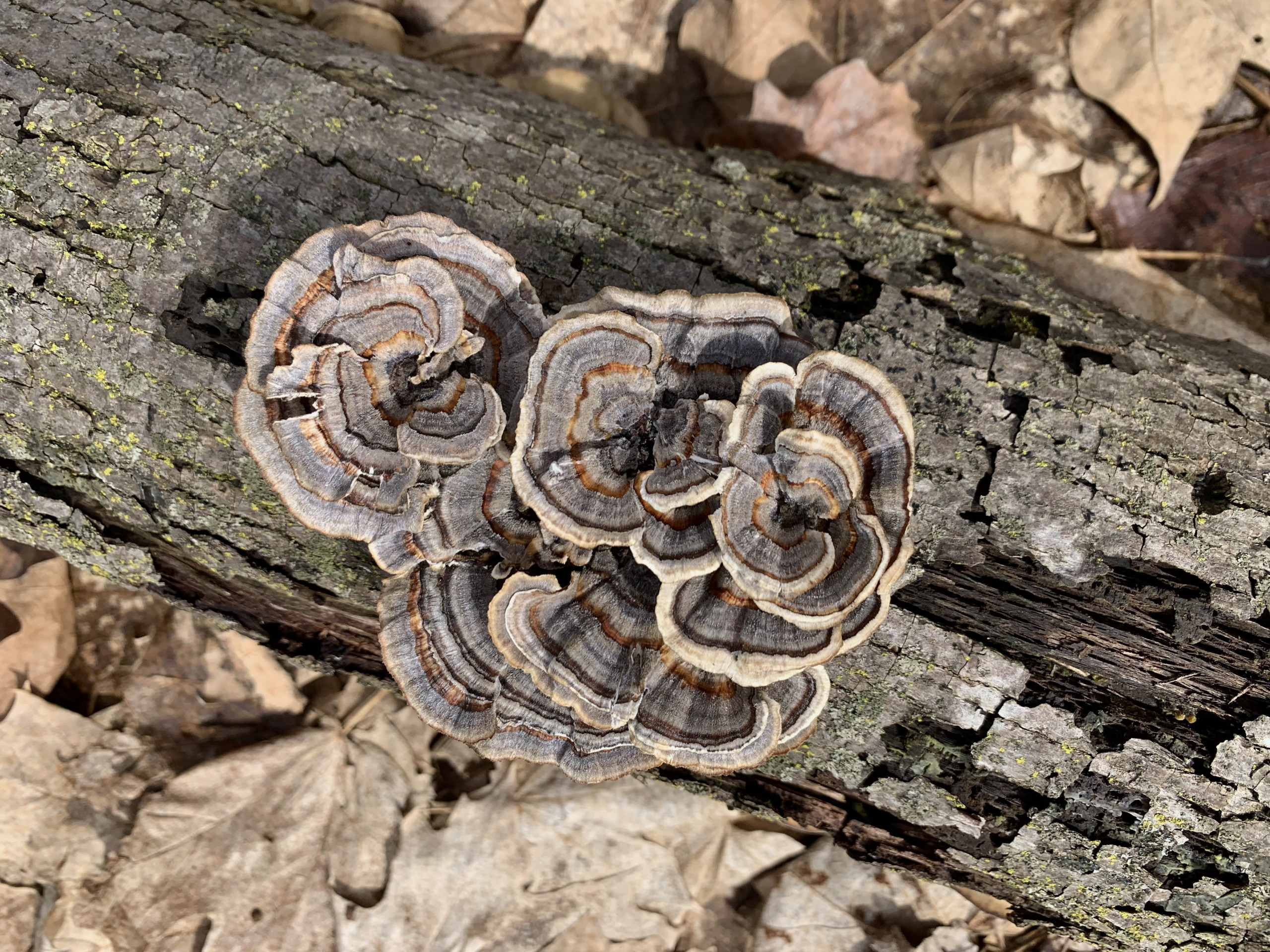
The Pileus is the scientific term for the cap of a mushroom. It is the uppermost part of the fruiting body and protects the spore-producing structures. A mushroom with a pileus is pileate, and a mushroom lacking a pileus, consisting of just a fertile surface with its back attached to or intergrown with the substrate, is said to be resupinate. Resupinate fungi usually grow on a substrate that is horizontal, like a fallen log.
Stipe (Stem)
The stem that supports the cap of a mushroom. Stipes evolved for spore dispersal purposes, as wind currents and animals will pick up more spores from a cap higher off the ground.
Gills (Lamellae)
The Lamellae are thin, blade-like structures under the cap that produce and release spores for reproduction. Mushroom gills are the thin, papery structures that hang vertically under the cap. The sole purpose of these gills, called lamellae, is to produce spores. The spores are then dropped from the gills by the millions, where they are scattered by wind currents. Examining the gills is important when identifying mushrooms. Mycologists have many terms to describe gill structure, some very precise and complicated.
Mycorrhiza
Mycorrhiza refers to the mutually beneficial, symbiotic relationship between a plant’s roots and fungi. In this partnership, the plant provides fungi with carbohydrates from photosynthesis for food, while the fungi, in turn, provide the plant with essential mineral nutrients and increased access to water from the soil. These associations are incredibly common, with approximately 90% of all land plants having mycorrhizal fungi and depending on them for survival and flourishing in various ecosystems.
Spores
Microscopic, single-celled reproductive units that function similarly to seeds to disperse and grow new fungi. They are produced in the mushroom’s fruiting body, typically on the underside of the cap, and are released by wind, water, or animals into the environment. Once a spore lands in a suitable location with moisture, organic matter, and nutrients, it germinates and develops into a network of fungal threads called mycelium, which eventually forms a new mushroom.
Basidiocarp (fruiting body)
A basidiocarp is the visible reproductive structure, or fruiting body, of basidiomycete fungi, responsible for producing and dispersing basidiospores. The basidiocarp forms when conditions are right, and it contains specialized cells called basidia that generate the spores needed for the fungus to reproduce.
Ascomycete/Basidiomycete
Ascomycetes (sac fungi) and Basidiomycetes (club fungi) are two major groups of fungi, distinguished by their sexual spore production: ascomycetes produce spores (ascospores) inside a sac-like ascus, while basidiomycetes produce spores (basidiospores) on the outside of a club-shaped basidium. Ascomycetes are known for their varied forms, including yeasts and lichens, and can reproduce asexually using conidia. Basidiomycetes are known for their visible, often mushroom-shaped fruiting bodies called basidiocarps.
Mycellium
Mycelium is the vegetative part of a fungus, a complex network of thread-like filaments called hyphae that grows underground or on other substrates like soil or wood. These structures absorb nutrients from the environment and, under the right conditions, can develop into visible fruiting bodies, such as mushrooms.
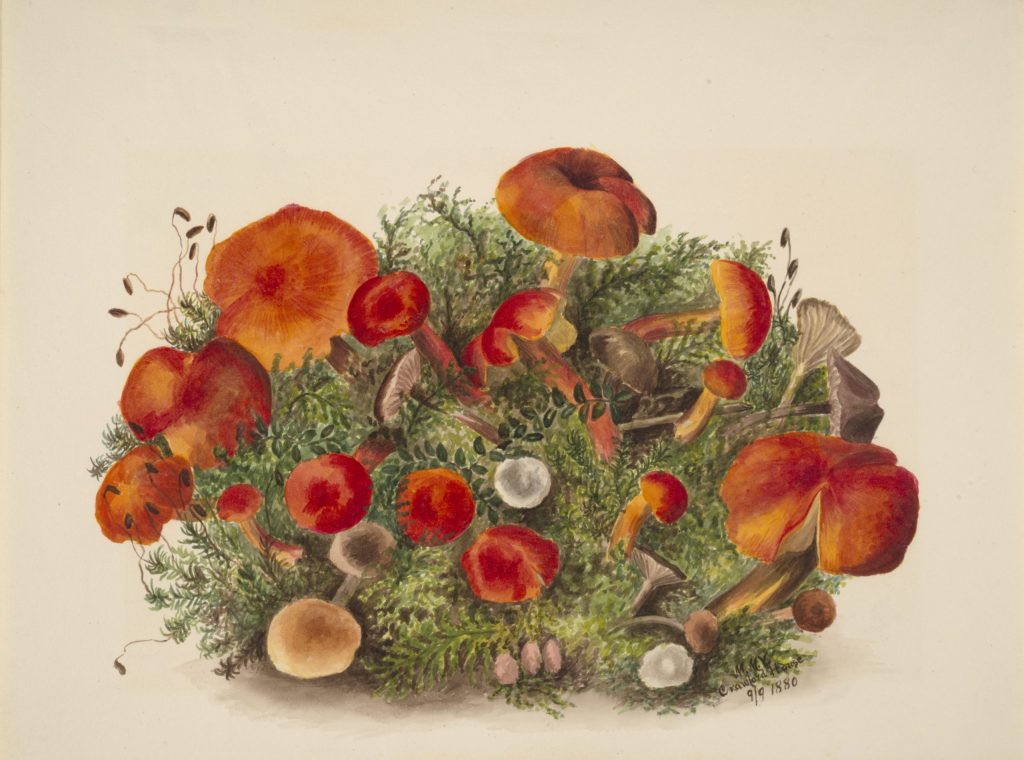
Below is a list of fungi known to exist in the Natural Lands, compiled by Lillian Pihart in 2026 and ordered by strict taxonomic categorization and iNat observations. You can help expand this list by exploring the Natural Lands and posting on iNat!
What do native, threatened & invasive mean?
Native: Native species are plants or fungi that occur naturally in Minnesota’s ecosystems and evolved there without human introduction. This category may also include species that have been recently discovered, rediscovered, or are currently being monitored on conservation watchlists.
Threatened: An umbrella term used for species facing a high risk of decline. Includes three conservation categories: Critically Endangered (CR), Endangered (EN), and Vulnerable (VU). A species is considered threatened if it is likely to become endangered in the foreseeable future throughout all or a significant portion of its range in Minnesota.
Invasive: Plants introduced to an area through human activity where they do not naturally occur are called non-native species. When a non-native plant spreads beyond where it was originally planted and begins to outcompete native plants and disrupt natural ecosystems, it is considered invasive.
Native
Black knot (Apisosporina morbosa)
Milk-white toothed polypore (Irpex lacteus)
Turkey-tail (Trametes versicolor)
Mica cap (Coprinellus micaceus)
Mossy maze polypore (Cerrena unicolor)
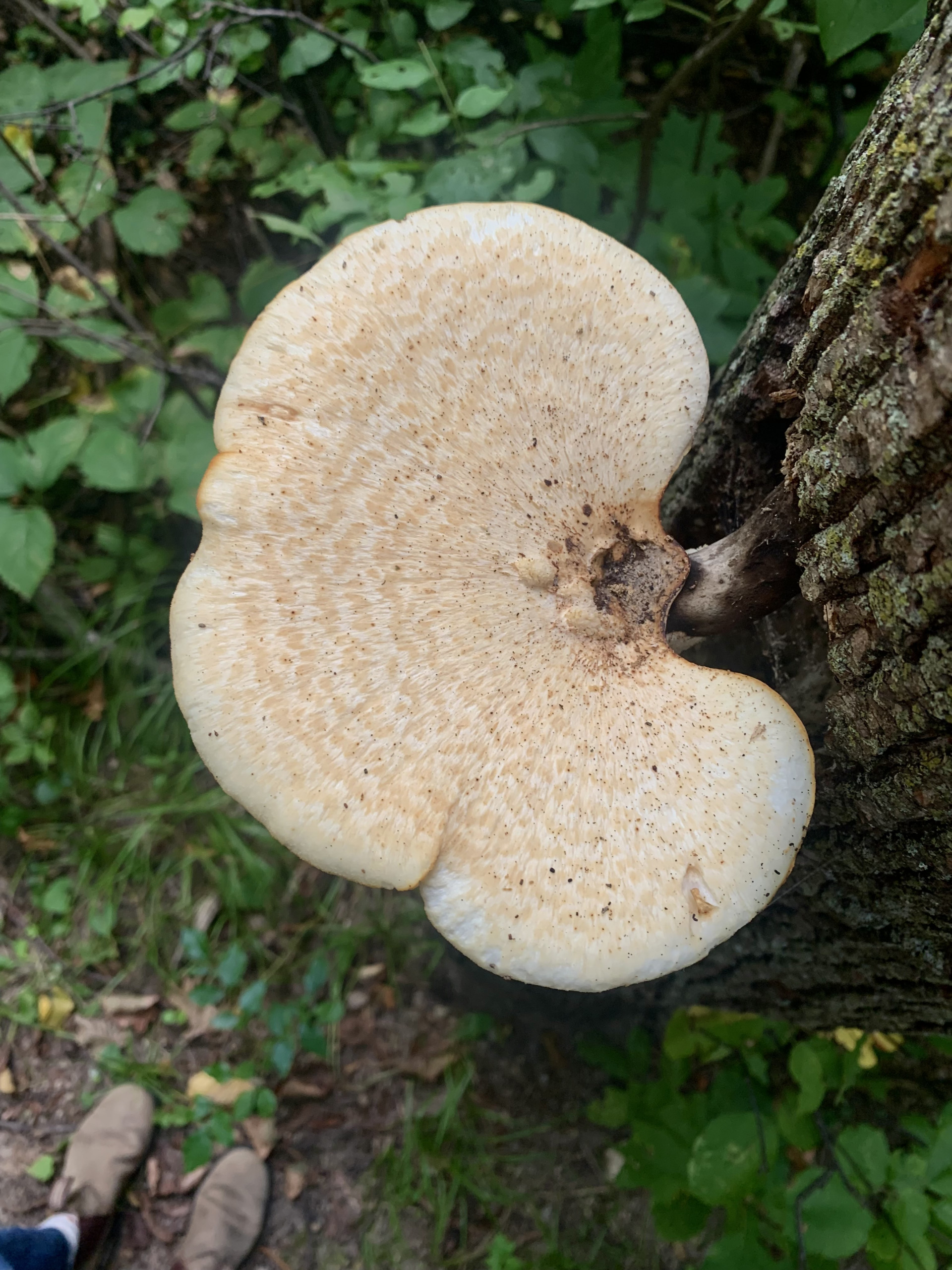
Artist’s bracket (Ganoderma applanatum)
Coral tooth fungus (Hericium coralloides)
Crowded parchment (stereum complicatum)
Hooded sunburst lichen (Xanthomendoza fallax)
Shaggy mane (Coprinus comatus)
Candelflame lichen (Candelaria concolor)
Pear-shaped puffball (Apioperdon pyriforme)
Splitgill mushroom (Schizophyllum commune)
Violet-toothed polypore (Trichaptum biforme)
Eastern speckled shield lichen (Punctelia bolliana)
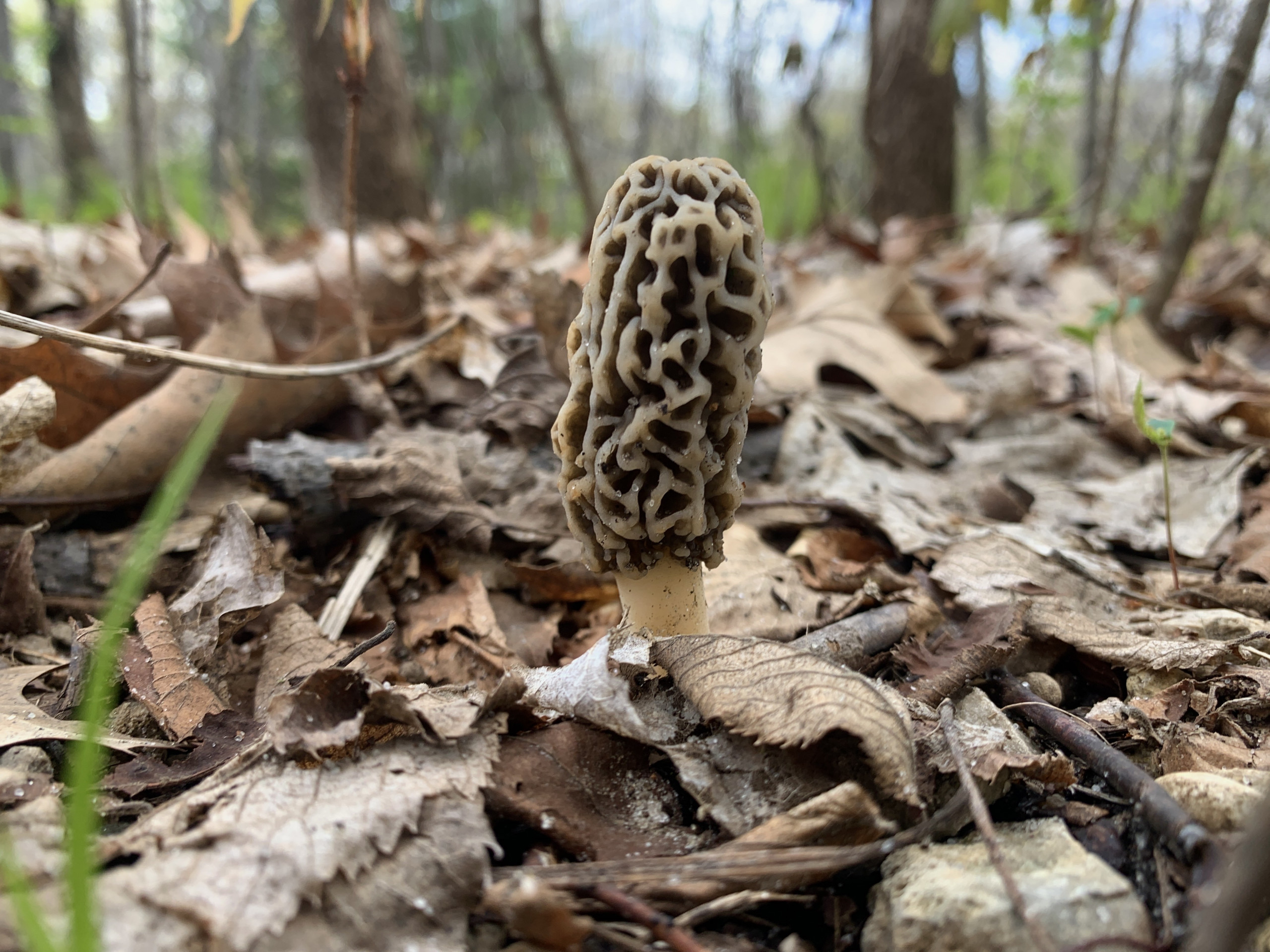
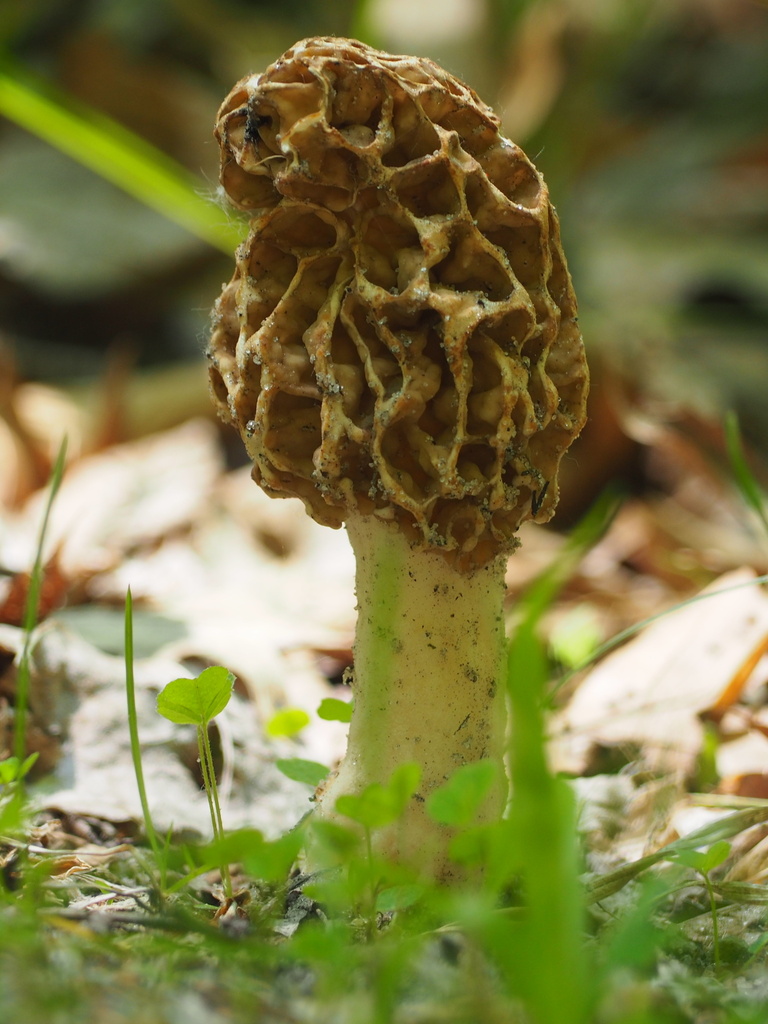
American yellow morel (Morchella americana)
Hexagonal-pored polypore (Neofavolus alveolaris)
Little nest polypore (Trametes conchifer)
Oyster mushroom (Pleurotus ostreatus)
Chicken of the woods (Laetiporus sulphureus)
Hare’s foot inkcap (Coprinopsis lagopus)
Dead man’s fingers (Xylaria polymorpha)
White jelly fungus (Protohydnum album)
Common puffball (Lycoperdon perlatum)
Pleated inkcap (Parasol plicatilis)
Conifer mazegill (Gloephyllum sepiarium)
Common greenshield lichen (Flavoparmelia caperata)
Orange jelly spot (Dacrymyces chrysospermus)
British soldier lichen (Cladonia cristatella)
Cedar-apple rust (Gymnosporangium juniperi-virginanae)
Ravenel’s stinkhorn (Phallus ravenelii)
Hoof fungus (Fomes fomentarius)
Meadow mushroom (Agaricus campestris)
Poplar sunburst lichen (Xanthomendoxa hasseana)
Whitewash lichen (Phlyctis argena)
Sinewed bushy lichen (Ramalina americana)
Scaly ink cap (Coprinopsis variegata)
Wrinkly stinkhorn (Phallus rugulosus)
Common ink cap (Coprinopsis atramentaria)
Candlesnuff fungus (Xylaria hypoxylon)
Yellow fieldcap (bolbitius titubans)
Cramp balls (Annulohypoxylon thouarsianum)
Golden-eye lichen (Teloschistes chrysopthalmus)
Deer mushroom (Pluteus cervinus)
Devil’s dipstick (Mutinus elegans)
Green-spored parasol (Chlorophyllum molybdites)
Dyer’s polypore (Phaeolus schweinitzii)
Lead-grey puffball (Bovista plumbea)
Thin-walled maze polypore (Daedaleopsis confragosa)
Eastern northern american destroying angel (Amanita bisporigera)
Quince rust (Gymnosporangium clavipes)
Dyeball (Pisolithus arhizus)
Fringed candleflame lichen (Candelaria fibrosa)
Giraffe spots (Peniphora albobadia)
White green-algae coral (Multiclavula mucida)
American rosette lichen (Physcia americana)
Powdery sunburst lichen (Xanthomendoza ulophyllodes)
Sulphur firedot (Gyalochia flavovirescens)
Ash-tree bolete (Boletinellus merulioides)
Common brown cup (Phylloscypha phyllogena)
Lynx paw oyster (Pleurotus levis)
Fan-shaped jelly fungus (Dacrymyces spathularia)
White dapperling (Leucocoprinus leucothites)
Threatened
Ash-tree bolete (Boletinellus merulioides)
Reliance on ash trees, which are being decimated by the emerald ash borer (EAB)
Invasive
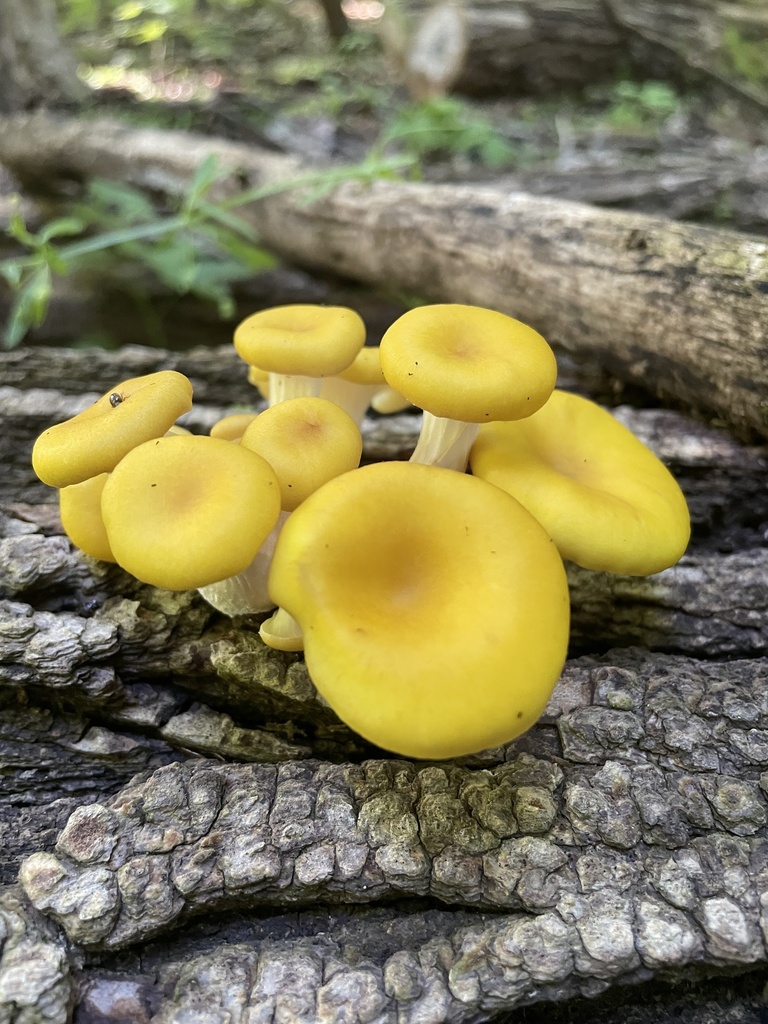
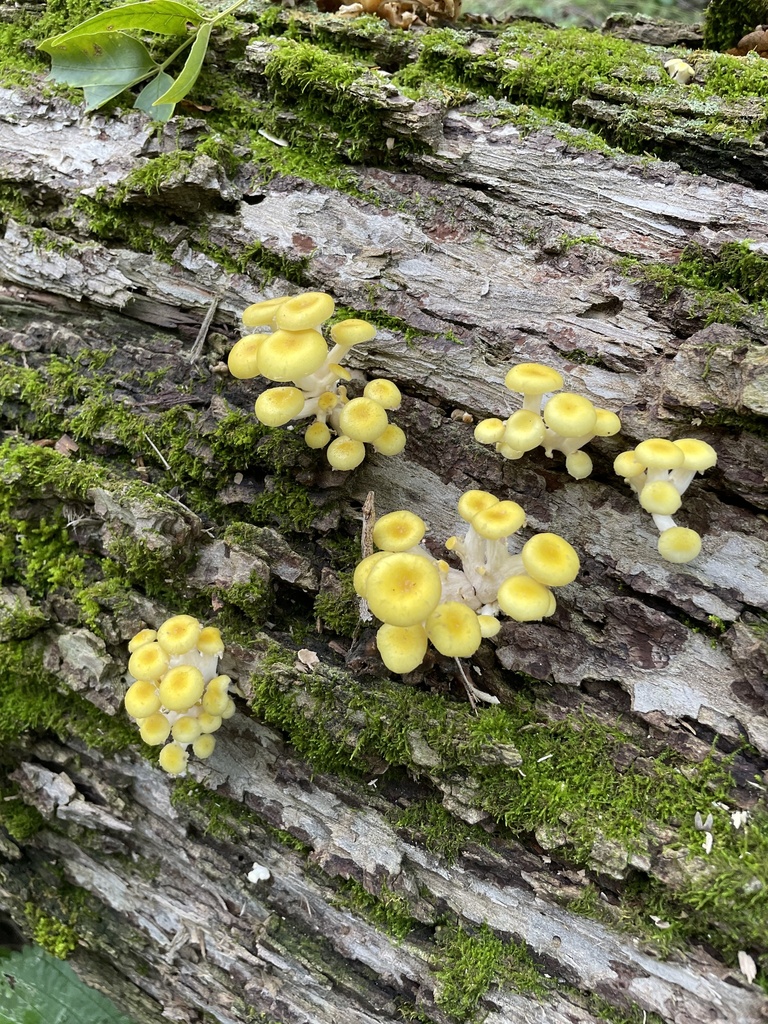
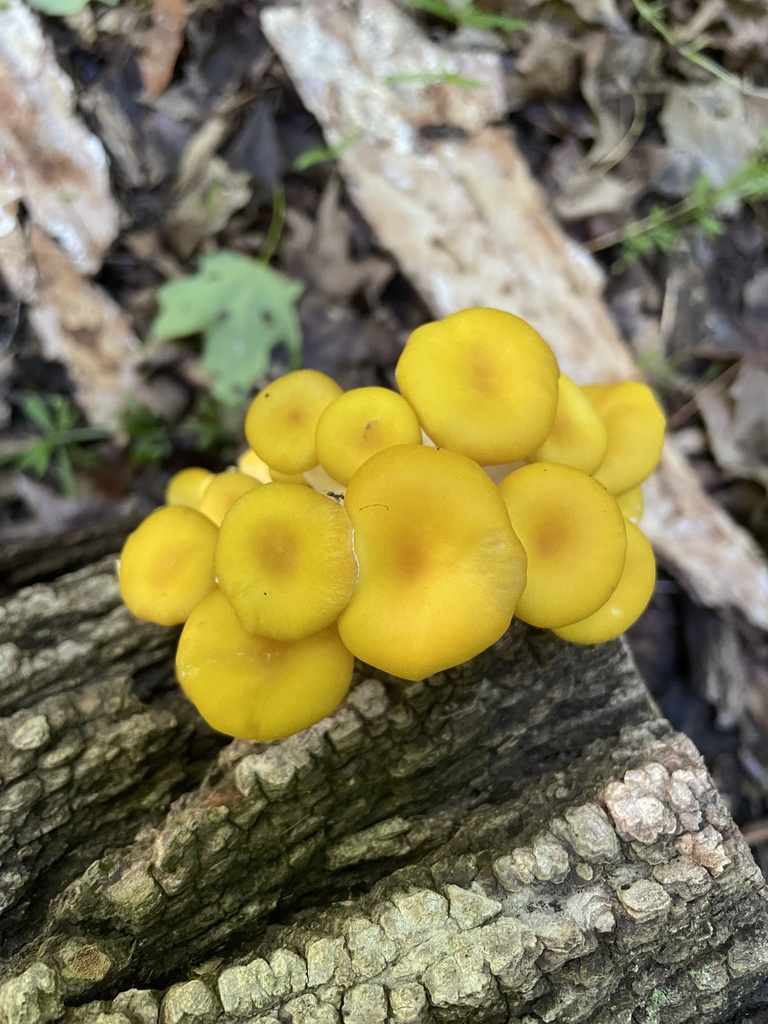
Golden oyster mushroom (Pleurotus citrinopileatus)
Pale oyster mushroom (Pleurotus pulmonarius)
Destructive pholiota (Hemipholiota populnea)
References
Dive into the captivating world of mushrooms | mushroom appreciation. (2022, August 20). https://www.mushroom-appreciation.com
Fungi. (n.d.). Bell Museum. Retrieved https://www.bellmuseum.umn.edu/fungi/
Hoff, M. (2022, September). Fungus Among Us. Minnesota DNR. https://www.dnr.state.mn.us/sites/default/files/assets/mcv/2022/sep-oct/yn/yn_mushrooms.pdf?v=2025.10.16-18.27.51
Kraisitudomsook, N., Karlsen-Ayala, E., & Smith, M. E. (2025). Unbreakable: Bird’s nest fungi tolerate extreme abiotic stresses. Fungal Ecology, 77, 101450. https://doi.org/10.1016/j.funeco.2025.101450
Minnesota biodiversity atlas home. (n.d.). https://bellatlas.umn.edu/
Minnesota mycological society. (2026, January 1). Minnesota Mycological Society. https://minnesotamycologicalsociety.org/
Minnesota’s endangered, threatened, and special concern species. (n.d.). Minnesota DNR. https://www.dnr.state.mn.us/ets/index.html
Pileus. (n.d.). https://www.mushroomthejournal.com/greatlakesdata/Terms/pileu249.html
Spring ephemerals: Wildflowers you can find between snow-melt and leaf-out. (2024, May 8). Friends of the Mississippi River. https://fmr.org/updates/conservation/minnesota-spring-ephemeral-wildflowers
The ICUN red list of threatened species. (n.d.). IUCN Red List of Threatened Species. https://www.iucnredlist.org/en
Untitled-study of mushrooms; Smithsonian American art museum. (n.d.). https://americanart.si.edu/artwork/untitled-study-mushrooms-26503
You must be logged in to post a comment.