The Major
The Race and Ethnic Studies major includes any one of the courses numbered Race 121-125, (usually 121 or 122) and seven other courses from at least three different departments, plus a senior project.
The Concentration
The Race and Ethnic Studies concentration includes RACE 121-122 and four other courses from at least two different departments.
What makes our program different?
Unlike many majors, which prescribe sequences of courses, Race and Ethnic Studies allows students considerable freedom in choosing classes that fulfill their interests (and often, at the same time, fulfill general education requirements). Many RACE majors are double majors, because Race and Ethnic Studies courses complement many majors in the humanities, interdisciplinary studies, social sciences, and the fine arts.
Major and Concentration Advising
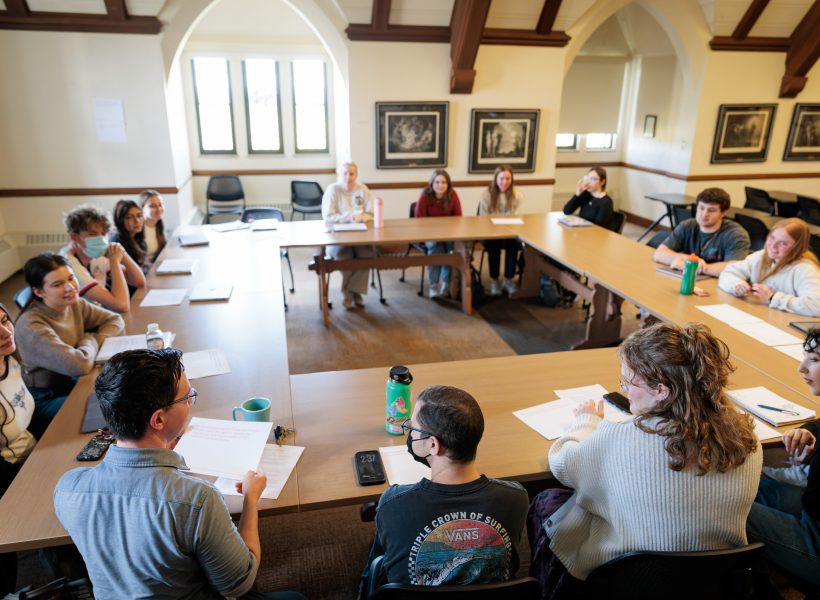
In a recent survey of alumni who completed Intro to Race and Ethnic Studies and at least three electives, 98% reported that had they known of their degree progress they would have declared a RACE major or concentration due to the importance of cross-cultural knowledge and skills to their vocations. Of this group, 40% would have pursued a major and 60% a concentration. To meet this need, Race and Ethnic Studies formed an advising team to help students plan their coursework in fulfillment of a major or concentration. To begin exploring your interests, please download the advising worksheet below and make an appointment with a faculty affiliate/program advisor.
Intended lEARNING ouTCOMES
Outcome 1
Foundational knowledge of the concepts, theories, and debates central to the field of Ethnic Studies and to the critical study of race, ethnicity, and indigeneity in socio-historical contexts.
Outcome 2
The ability to analyze racial and ethnic dimensions of power, privilege, and oppression as they intersect with multiple categories of difference (such as class, gender, nation, religion, and sexuality) using two or more disciplinary approaches.
History of race and ethnic studies at st. olaf
2019-20 Race and Ethnic Studies celebrates 50 years on the Hill, honoring trailblazers Deborah Anderson ’72 and Ronald E. Hunter ’70. Alumni friends from Oles for Racial Awareness, Change, and Equity along with small donors establish a program endowment.
2018 RACE co-sponsors “Reclamation: The 50-Year History of CUBE and the Black Action/Advisory Committees” curated by Art/Art History and Race and Ethnic Studies major Lamar Gayles ’19. RACE also receives funding from St. Olaf’s Mellon grant “To Include Is to Excel” for a three-year curricular enhancement project titled “Un-bordering Race and Ethnic Studies.”
2011-16 Funded by a provost’s Academic Innovation Fund grant, ARMS convenes “Mapping Ethnic Studies,” a faculty learning community, and renames itself Race and Ethnic Studies (abbreviated RACE). In 2016, supported by another provost’s grant, RACE partners with Social Work and Family Studies to offer a college-wide faculty learning community titled “Teaching Race and Family.”
1988-89 A Pew grant enables the program to convene a college faculty workshop titled “Teaching Race and Racism.” The program renames itself American Racial and Multicultural Studies (ARMS).
1974 Along with Latin American Studies, the program receives approval to offer a major.

1969 The National Endowment for the Humanities accepts a proposal by professor and chair of History Henry Fritz to establish American Minority Studies, an interdisciplinary program that awards a concentration. Professor Fritz, a scholar of Native American Studies, writes that the program will be “a counterpart for the domestic scene of our program in Asian Studies.” American Minority Studies courses are also open to students from American Colleges of the Midwest-affiliated institutions.
1967-68 St. Olaf students from the newly formed Cultural Union for Black Expression and other student organizations organize with the “Free University” to teach themselves topics not offered by the college curriculum. They develop and lead night courses such as Vietnam, Black History, Arabic, and Urban Topics. This student initiative continues into the 70s and lays the groundwork for faculty curricular development. Professor of History Kenneth O. Bjork is an early advocate, calling for more scholarship about the experiences of people of color and how they must be the ones to lead this field. Disciplines like history, he argues, can aid in this endeavor.
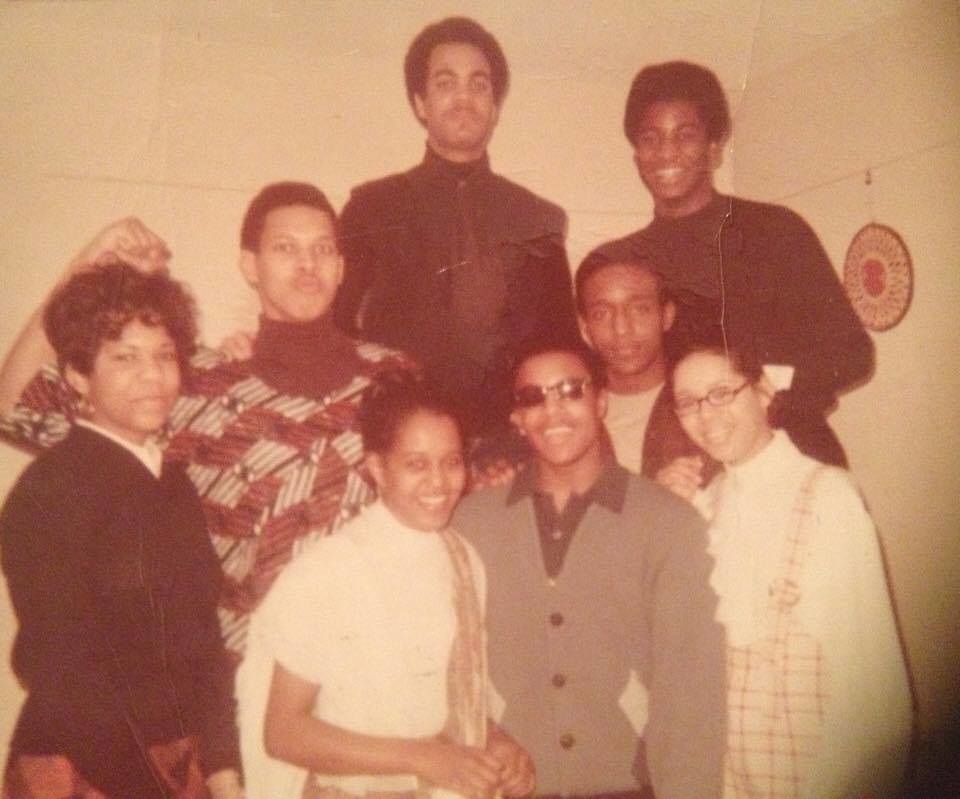
Archival research credit: LaMar Gayles ’19
You must be logged in to post a comment.