A unique combination of cognitive, affective, psychomotor, physical, and social abilities is required to satisfactorily perform these functions. These functions are essential to the successful completion of the requirements of the nursing program and necessary to ensure the health and safety of patients, self, and other healthcare providers. As outlined below, these functions comprise the “Technical Standards” performance requirements for students. Prospective students must demonstrate that they can meet these technical standards with or without reasonable accommodations and continue to do so throughout the program.
The technical standards include, but are not limited to, the following abilities:
Standard:
The student should have sufficient physical abilities to provide general care and treatment to patients in all health care settings.
Example of Necessary Activity:
Move around in client rooms, workspaces and treatment areas, administer cardio- pulmonary procedures, lift 40 pounds and move patients from bed to wheelchair or stretcher. Must be able to sit, stand, move and tolerate taxing workloads for up to 12 hours at a time.
Standard:
The student must be able to acquire information presented through demonstration and experience in the basic and nursing sciences.
Example of Necessary Activity:
The student must be able to observe the patient accurately, at a distance and close at hand, and observe non-verbal communications when performing nursing assessments and interventions or administering medications. The student must be capable of perceiving the signs of disease and infection as manifested through physical examination. Such information may be derived from visual inspection and images of the body surfaces, palpable changes in various organs and tissues, and auditory information (patient voice, heart tones, bowel and lung sounds, etc.)
Standard:
The student must have the ability to communicate effectively and sensitively, in oral and written form, with others students, faculty, staff, patients, family, and other professionals.
Example of Necessary Activity:
The student must be able to express their ideas and feelings clearly and demonstrate a willingness and ability to give and receive feedback. The student must be able to convey or exchange information at a proficiency level to obtain a health history, identify problems presented, explain alternative solutions, and give directions during treatment and post-treatment. The student must be able to effectively communicate in English through verbal, written and electronic formats with the ability to retrieve information from various sources of literature and computerized data bases. The student must able to communicate verbally in English in classroom presentations, seminars, simulation, practicum sites, practicum conferences, and on- line formats. The student must be able to process and communicate information on the patient’s status with accuracy in a timely manner to members of the health care team. The appropriate communication may also rely on the student’s ability to make a correct judgment seeking supervision and consultation in a timely manner.
Standard:
The student must be able to measure, calculate, reason, prioritize, analyze, integrate, synthesize information and act with integrity and judgment (ability to manage impulsivity). The student must have the ability to sustain attention and memory to maintain patient safety.
Example of Necessary Activity:
The student must be able to read and comprehend extensive written materials. The student must also be able to evaluate and apply information and engage in critical thinking in the classroom, lab, simulation, and clinical setting within the time constraints unique to each clinical setting. The student must be able to calculate medication dosages, understand laboratory values, read and understand physician orders.
Standard:
The student must possess the emotional health required for the coping ability with death, anxiety, and multiple demands, the utilization of their intellectual abilities, the exercise of good judgment, and the prompt completion of all responsibilities attendant to the nursing care of patients and families.
Example of Necessary Activity:
The student must be able to maintain mature, sensitive, and effective relationships with patients and their families, students, faculty, staff and other professionals under all circumstances, including highly stressful situations. They must have the emotional stability to function effectively under stress and to adapt to an environment that may change rapidly without warning and/or in unpredictable ways. The student must be able to experience empathy for the situations and circumstances of others and effectively communicate that empathy. The student must be able and willing to examine their behavior when it interferes with productive individual or team relationships. The student must possess skills and experience necessary for effective relationships in diverse academic and work environments.
Standard:
The student must possess the ability to practice nursing in an ethical manner.
Example of Necessary Activity:
The student must be willing to learn and abide by professional standards of practice. They must possess attributes that include compassion, empathy, altruism, integrity, honesty, responsibility and tolerance. The student must be able to engage in patient care delivery in all settings and be able to deliver care to all populations including but not limited to children, adolescents, adults, individuals with disabilities, medically compromise patients, and vulnerable adults.
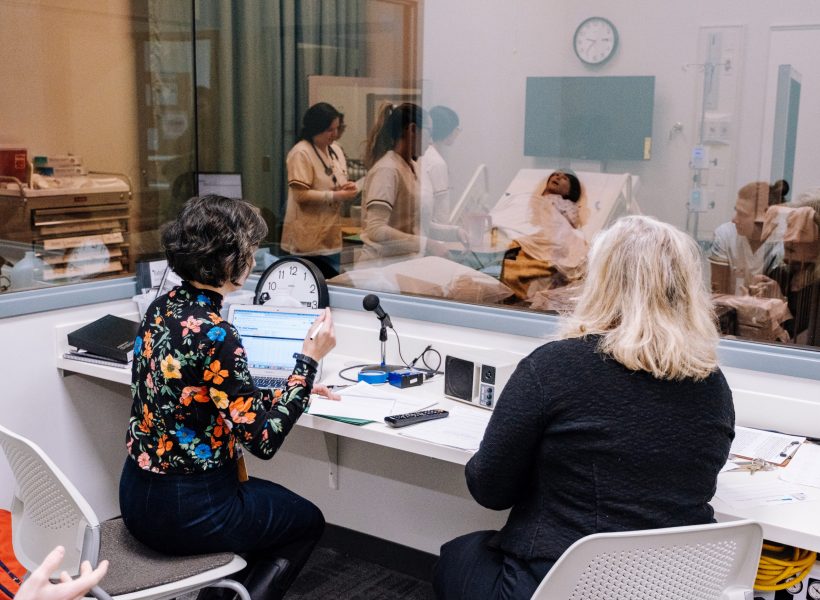
The St. Olaf College Department of Nursing is committed to equal access for all persons in its program and abides by applicable statutes and regulations relating to the equality of opportunity. If you have questions or concerns about your ability to meet the technical standards with or without accommodations, or if you would like to arrange reasonable accommodations, please contact Disability and Access (DAC) https://wp.stolaf.edu/dac.
*Adapted from the University of Minnesota School of Nursing Technical Standards and Saginaw Valley State University Department of Nursing
LAST REVIEWED: aPRIL 2026