Contents
Senior Reflection – Erin Frankson
Natural Lands Winter Photo Contest Winners
Senior Reflection – David Skiba
Climate, Phenology and the Natural Lands
 While some students come to St. Olaf with a clear career goal in mind, I arrived at St. Olaf with little idea of what I wanted to do with my degree after I graduated. I knew that I wanted to major in biology; but beyond that, I had few plans. During the course of my study at St. Olaf, I experimented with several different routes and paths in the Biology Major. And now, I think I finally have a plan that satisfies me. While the process has been long and complex, it has taught me a great deal about myself. Ultimately, I am deeply thankful for the individuals and organizations both on and off of campus that have made my journey in biology such a fulfilling experience.I began my freshman year taking courses in chemistry, and while it came naturally to me, I didn’t especially enjoy it. It was such a relief when I finally got to take my first biology course. No longer did I have to worry about pre-labs, calculations, or unpronounceable chemicals. As freshman year started to wind down, I began looking for summer job opportunities. I applied for several positions at the University of Wisconsin-Madison, but was turned down. I became frustrated at the fact that I was highly unqualified for most of the positions out there. However, I was determined to find a job. I e-mailed every single family friend and neighbor who I could think of asking for advice on how to land a job in science. And luckily for me, I came across a friend of a friend who worked in the UW-Agronomy Department. Although he said the work wouldn’t be glamorous, he offered me a job in his corn breeding lab for the summer. Finally, I had my foot in the door.I spent a great deal of that summer in the cornfield sweating to death and getting covered in pollen. However, I also got to learn about the process of corn breeding and had the opportunity to interact with numerous scientists who were working in genetics and crop science. The job was my first foray into the field of real world science. And after that summer in the cornfields, I was hooked.I spent the next two summers participating in REU (Research Experience for Undergraduates) Programs at Iowa State University and the Donald Danforth Plant Science Center. While I enjoyed the process of conducting research and collaborating with other scientists, I left the experiences feeling unsatisfied. I realized that I needed more direct interaction with people than this research offered me. So, this past year, I decided to channel my passion for biology into a new career path: teaching.I have wanted to become a teacher ever since I was in third grade. However, as I entered middle and high school, my dream of teaching got pushed aside as I encountered new subjects that I enjoyed. Ultimately, I am thrilled with my decision to return to teaching and I look forward to the idea of spending the rest of my life educating America’s future generation of scientists. I have had some amazing professors during my time here at St. Olaf College. And I can only hope that one day I will be able to inspire students to learn about science, just as they inspired me.
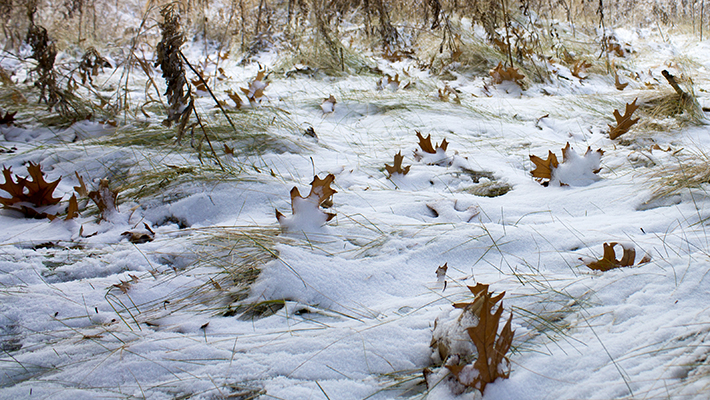
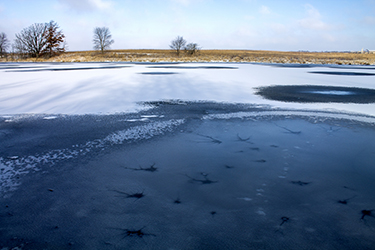
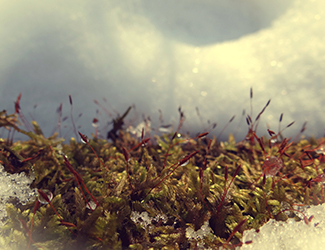
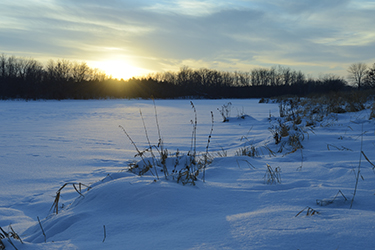
Natural Lands Winter Photo Contest Winners
Overall Winner – Kari Riley |
|

Close-up Winner – Erika Terwilliger
Landscape Winner – Kari Riley
“Life in Winter” Aly Young
Snow Scene Winner – Dean Neuburger |

Climate, Phenology and the Natural Lands |
|
| By Andrew Kaul ’13The large body of literature on trends in global climate change indicates that both globally and locally, climate patterns have changed since the turn of the 21st century. In Minnesota, one of the clear patterns scientists have observed is a shortening of winters, with higher average temperatures. Among a host of other interactions, climate change directly and seriously affects the timing of annual plant and animal life cycle events. Phenology is the study of these events and the change in their timing due to climate and seasonality. This discipline has been an important tool for documenting climate change to date, and has continued importance in the effort to predict what will happen in future years.In general, the primary climate drivers of phenological events are temperature, precipitation, and sunlight, but what exactly is affected by variation in these patterns? Many species in an ecosystem are highly co-evolved with others and are dependent on them for one or many ecological interactions. Climate change can alter phenology such that biological interactions including herbivory, competition, pollination, predation, and others are disrupted. In Minnesota, a major concern is the effect of climate on growing season length. With shorter winters and longer growing seasons, forests can sequester more carbon than before, and function as a negative feedback on climate trends resultant from atmospheric effects of rising carbon dioxide concentrations.Interestingly enough, we are in the tail end of a long and cold winter, perhaps one that will later be seen as an outlier in the trending changes Minnesota is experiencing. Data on a standout year such as this one can provide just as much, if not more information about how local flora and fauna are able to adapt to plasticity in climate, and thus phenology. On February 24th of 2012, the student naturalists observed leaves of false rue anemone sprouting up from the ground. On March 2, the big pond on the natural lands was thawed and mallards were feasting on algae and invertebrates. On March 30, eight different trees and herbs were noted to be producing active green leaves and shoots, with false rue anemone and bloodroot already producing flowers. As of today, March 21, 2013, the ground is covered in snow, the ambient air temperature is only 10 degrees Fahrenheit, and there is not a green plant to be found. When will the snow eventually melt and how far behind its “normal” schedule will nature be? Will bees and flowers be asynchronous or be able to adjust? Will there be a mismatch in plant seed production and birds’ nesting? The only way we can fully assess the effects of this long winter and late thaw is to collect detailed phenology data throughout the year.Fortunately, this is precisely what is occurring all over the state, nation, and even on a global scale. On the St. Olaf campus, each spring the student naturalists, faculty, and other curious students contribute to an open phenology observation board on the wall next to RNS 440. Additionally, ecology students conduct formal investigations into the phenology of specific species, the data from which are submitted to Project Budburst, a nationwide phenology database. Only time can tell what will happen this spring, but hopefully we can learn from it and use this valuable data to plan for a future where Minnesota likely experiences novel climatic patterns. |