St. Olaf Energy Statistics
St. Olaf has long been committed to environmental responsibility and sustainability. This is reflected in our attention to reducing carbon emissions and energy conservation measures.*
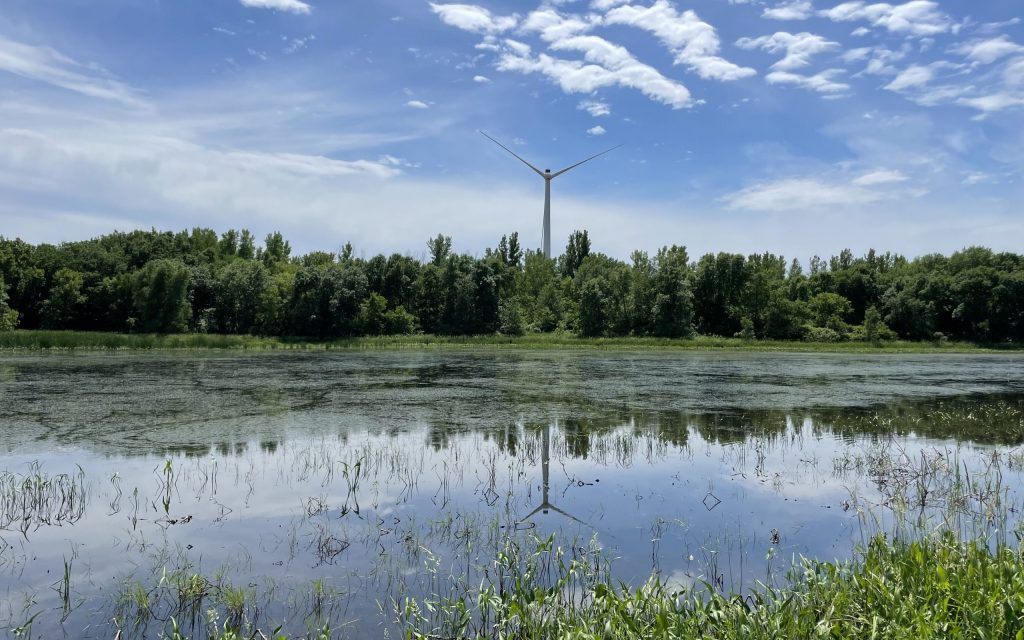
Average percentage of annual energy demand produced by ‘Big Ole’, the on-campus wind turbine.
Percentage of annual ELECTRICITY demand drawn from renewable energy sources (Note that non-electric energy demands, including heating and cooling, do not appear in this category).
Average annual kilowatt hours (kWh) of electricity produced by on-site solar panels located on the roof of Kildahl Hall.
*Data updated as of June 2023.
Energy Conservation and Efficiency Initiatives
. . . . . . . . . . . . . . . . . . . . . . . . .
St. Olaf is the first liberal arts college in the nation to construct an on-campus utility-grade wind turbine that provides energy directly to its campus.
The college subscribes to Xcel Energy’s Windsource® program, ensuring that all of the college’s purchased energy comes from renewable sources.
St. Olaf subscribes to a percentage of over 30 solar farms in the region. While not directly powering our campus, these subscriptions enable more of the electrical power grid to be sourced from renewable solar energy.
Campus buildings are either built or retrofitted with innovative insulation systems to decrease the energy demand for excess heating and cooling.
Other Resource-Efficient Initiatives
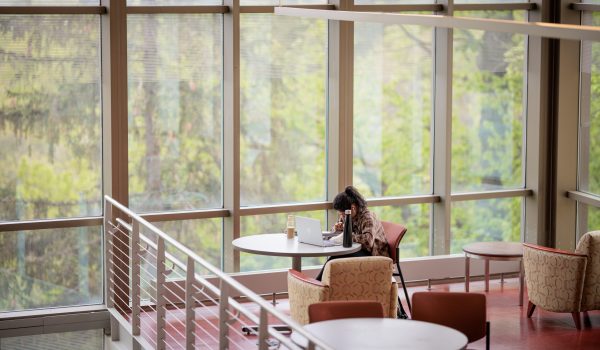
Our Facilities team works hard to keep our campus running effectively while also finding ways to conserve both energy and financial resources.
- Low consumption toilets are installed in recently constructed buildings, including Regents Hall of Sciences and New Hall. They use 1.6 gallons per flush, which is the current EPA standard and much lower than previous models.
- All showers are installed with low-consumption showerheads, using 2.0-2.2 gallons of water per minute.
- The laundry machines installed in every dorm are high-efficiency and were designed with sustainability in mind. Students can choose to wash their clothing on an “Eco” setting, which uses less water than the other options.
- Outdoor lighting fixtures and lamps are turned off during the day to save electricity, and are programmed to turn on based upon the light intensity of their surroundings (measured in foot-candles). Rather than relying on a timed system, the lights turn on only when it’s dark enough to need them.
- Many of the floors of Rolvaag Memorial Library have motion-sensor lighting systems, which activate only when students or staff are present.
- Many indoor spaces are designed to maximize natural lighting, including spaces in Tomson Hall, Buntrock Commons, Regents Hall, and Holland Hall.
Although campus heating is provided by natural gas boilers, our facilities team has implemented many system adjustments to increase energy efficiency.
- Our three industrial chillers (The machines that provide cold water that cools the campus) are run on 100% carbon-free electricity.
- Each individual room connected to the system on campus has an acceptable range of temperatures (68-85°F on warm days, 60-76°F on cool days) that can be set by the occupant. These limitations prevent excessive heating or air conditioning usage and standardize the range of temperatures possible within each building.
- Room temperatures and automated lights are adjusted appropriately overnight and during holidays when the room’s usage is minimal.
- When unoccupied, rooms are set at 60°F on cold days and 85°F on warm days to minimize unnecessary energy usage.
- The old constant drive pumps on the chiller system were replaced with variable frequency drives (VFDs) to reduce the system’s pumping speeds and match motor output to real-time loads. This ensures that the pump intensity is adjusted based upon minute-to-minute energy needs, eliminating excessive energy waste.
- Heat recovery systems have been implemented for use in the science facility and residence halls.
You must be logged in to post a comment.