ANXIETY IN THE GARDEN: AN INTRODUCTION TO EXISTENTIAL ANGST AND ITS RELATIONSHIP WITH CHOICE
By Joonas Elo ’28
Existentialism holds that existence precedes essence. This means that humans are essentially devoid of purpose if they don’t create it for themselves. As college students, we constantly face choices. While most choices seem to be made on autopilot in our everyday existence, every choice we make represents our existential freedom and autonomy. Søren Kierkegaard says that choice drives us into existential anxiety, or angst in Danish. In 1844, Søren Kierkegaard wrote The Concept of Anxiety, where he introduces the idea that anxiety is not only a psychological condition but an existential necessity for realizing one’s self-consciousness. When one makes choices, one enacts one’s existential freedom and agency, but the burdensome responsibility and unknown consequences of said choices bring about the aforementioned feelings of angst.
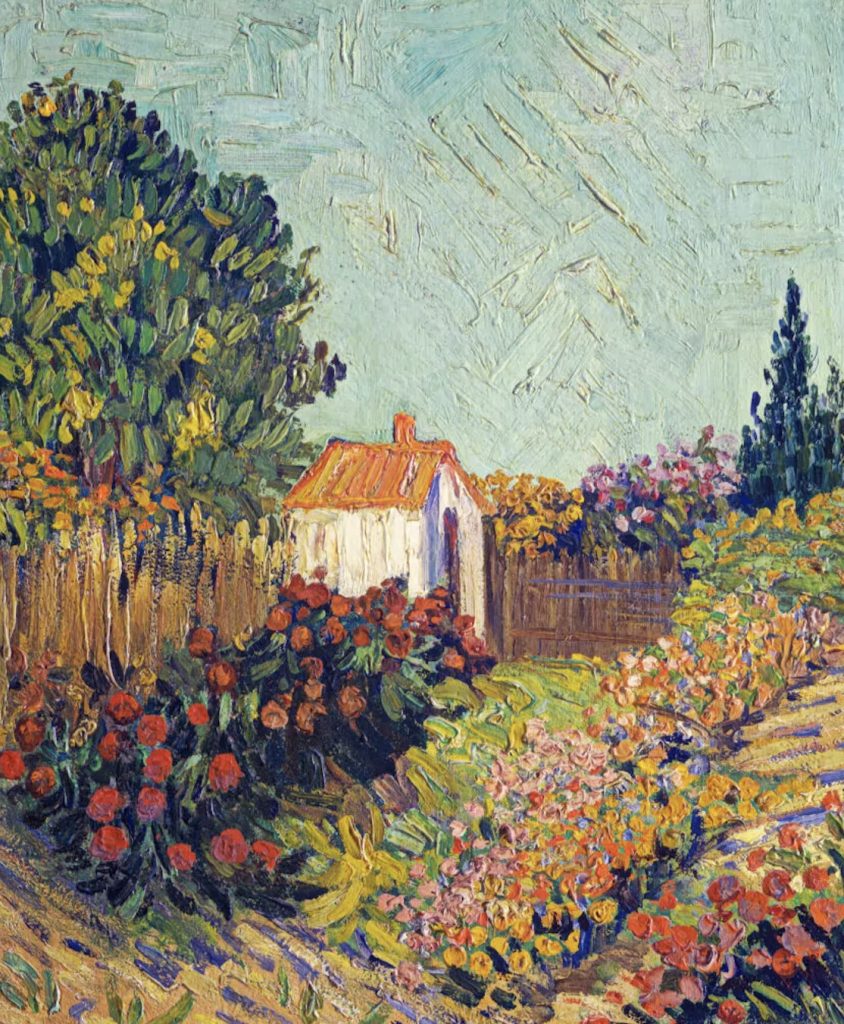
Kierkegaard introduces angst through the story of Adam in the Garden of Eden, which he refers to as the first sin. In Genesis, God tells Adam not to eat from the tree of the knowledge of good and evil. This causes anxiety for Adam, as the prohibition awakens “freedom” in Adam, or the “anxious possibility of being able” (CA 54). Adam acknowledges his ability to make choices in the light of God’s prohibition. What brings him angst is the realization of the imperative that he must make an autonomous choice and bear the consequences of that choice. (CA 54). It’s important to note that in this initial expression of freedom, humans are not making a choice between good and evil; instead, they are simply becoming aware of the ability to choose and being held responsible for their choices. That is what is most important (in my opinion) and is the point of anxiety. There is no presupposed good and evil (which comes later), and the notion of both is only realized after the choice is made. This brings the human condition into being. Essential to Kierkegaard’s novel interpretation of the Adam myth is that it applies to each and every human being. We are all Adam (the word for “human” in Hebrew), and we all experience anxiety in the garden.
The unknown, or the consequence, doesn’t scare us in the traditional sense (as in being afraid of some threatening object), but it causes anxiety. This anxiety or despair is our species’ “sickness unto death,” and something that encapsulates the human experience in each of the transcending decisions we make throughout our lives. While all of this may sound quite scary or nihilistic, one should find all of this quite hopeful; as Kierkegaard puts it, “Anxiety is freedom’s possibility…Anyone formed by anxiety is shaped by possibility, and only the person shaped by possibility is cultivated according to his infinitude” (CA 188). This means that anyone who is shaped by possibility can transcend themselves into the future through choice. One who has realized the finitudes of their life, and the infinitudes of their freedom, can grow into what it means to be human, an existentially free being. This is very similar to what Kierkegaard finds the self to be. “A HUMAN BEING IS spirit…A human being is a synthesis of the infinite (transcendance), and the finite (facticity)… a relation between the two terms” (SUD 19). It seems the self exists somewhere in the gray area between choice and its consequences. (Sartre will make this idea more straightforward to understand.)
Nearly a hundred years after Kierkegaard published The Concept of Anxiety, in the mid-1940s, the French existential tradition began with such thinkers as Jean-Paul Sartre, Albert Camus, and Simone de Beauvoir. During these years, Europe was depressed due to the war and the horrors of the Nazi regime. People sought meaning for their lives and questioned traditional bourgeois and Christian values, and the existence of God in general, due to the atrocities they had read about and seen on the faces of their comrades and loved ones. This sparked Sartre to write his comprehensive philosophy (while a prisoner of war in a nazi camp), Being and Nothingness, published in 1943. In his philosophy, Sartre adapts Kierkegaard’s existentialism, giving it a distinctly secular twist. Being and Nothingness formulates Existentialism as something apparent in each of our lives and advances Kierkegaard’s theories of anxiety in the context of secular life.
In the introduction to Being and Nothingness, Sartre outlines his phenomenology of being, or the individual’s perception of being. This sketches his larger philosophy, influenced by Edmund Husserl, and asserts that there are two types of being: being-for-itself and being-in-itself (29). Being-for-itself refers to a being with consciousness, self-awareness, and freedom, whereas a being-in-itself refers to objects that are fixed in their being by what they are in fact. I.e chairs or rocks. As the aim of Being and Nothingness, Sartre is seeking to answer questions such as “What is the meaning of these two types of being? What are the reasons of their both belonging to being in general? (and) What is the meaning of being, insofar as it includes within these two radically distinct regions of being?”(29). These questions inform Sartre’s magnum opus and some of the most important views in modern philosophy.
As Sartre points out, the human experience is encapsulated by choice and the existential anguish that accompanies it. It is up to us and only us to create meaning for ourselves through our actions, transcending ourselves into the future by the choices we make. By “transcending,” he means that when one chooses something, one projects oneself toward a future self. For example, if you decide to go to the gym, you are transcending yourself and shaping a future version of yourself through your actions there. If one wants to be a philosopher and chooses to study philosophy and participate in colloquia, they are transcending their current self into what they will themselves to become.
Although his existential philosophy is highly liberating, these choices may be too much for one to handle, leading one to fall into Bad Faith and to ignore one’s autonomy by fleeing from it. Unlike an ordinary lie, a lie told in bad faith differs linguistically and structurally. In a traditional lie, one knowingly tells an untruth to another who does not realize the truth of the matter. In contrast, in bad faith, the “deceiver and deceived” notion is absent (BN 90), as one lies to oneself and then hides the act of lying from oneself: the self hides the truth from itself and remains either in transcendence or in facticity, not recognizing itself as a synthesis of both.
For instance, when we conform unreflectively to specific societal roles, we may be in bad faith. We may fail to acknowledge our autonomy and capacity to choose our actions; instead, we allow external factors to dictate our behavior. This exemplifies being stuck in facticity. Sartre points to a waiter whose movements are too animated and whose intent is overly precise; he approaches customers with excessive animation. He is “attempting in his attitude to imitate the inflexible exactitude of some kind of automaton while carrying his tray…”(BN 102) This automation of the waiter’s actions fixes him in his facticity. The role of the waiter strips away the I and distances the person from any sense of transcendence. This solidifies their position as “the waiter,” in which they act as they expect a waiter to act, thereby hiding their freedom of choice. The I has assumed the role of the waiter, and the person simply conforms and acts as they are “expected to” by the role they have taken.
On the other hand, outside of being stuck in the facticities of one’s existence, one can also seek in bad faith to transcend one’s identity by entering a wonderland in which one’s facticity disappears. Let us return to the example of the aspiring philosopher, who transcends themselves into the future through the study of philosophy. Imagine the student dreams of being a philosopher, spending their days imagining a fairy tale of Nobel-winning publications and clapping crowds at their lectures. Still, they never actually study, write seriously, or address the realities or limitations of their current situation, such as deadlines, grades, or the actual learning of the subject. Here, the student is effectively stuck in transcendence because they are fleeing or hiding from their facticity.
By the notion of bad faith, Sartre states that what one should take away from both being stuck in facticity and being stuck in transcendence is that one’s choice should be conscious and active. One should accept the consequences of said choices by owning up to the choice, and not coming up with excuses for a lack of a better word, like “I had to,” or “I had no choice,” because there is always a choice. Even if one is stuck against a wall or seemingly out of choices, there is still a choice. Even if there is a gun to one’s head (figuratively or literally), Sartre argues that there is choice.
Choice is central to Existentialism for both Kierkegaard and Sartre. It defines and encapsulates the core of existentialism: freedom and autonomy, embodied in consequence. Both philosophers, in their own ways, argue that if one regards freedom and choice as inherent and as something one must live with, one can live well and self-actualize one’s freedom as an existential being. For college students, existentialism underscores our autonomous existence through the choices we make in daily life, and the anxiety these choices engender may empower us or, at least, give us a pep in our step as we navigate our seemingly endless semesters. Existential freedom allows us to step off the beaten track and chart our own way in life, with choice metaphorically forming the footsteps of our transcendence, and facticity allowing us to navigate our lives as transcendent beings without losing ourselves to something outside ourselves. Being one with one’s choices means existing as an existential being, being a true self in the eyes of Sartre and Kierkegaard.