20/20 Vision
Recent Acquisitions from Flaten Art Museum’s Permanent Collection
Curator’s note: This exhibition archive digitally presents images and interpretive texts from the exhibition 20/20 Vision. Scheduled to run from February 13–April 12, 2020 at the Flaten Art Museum, the exhibition closed prematurely due to COVID-19.
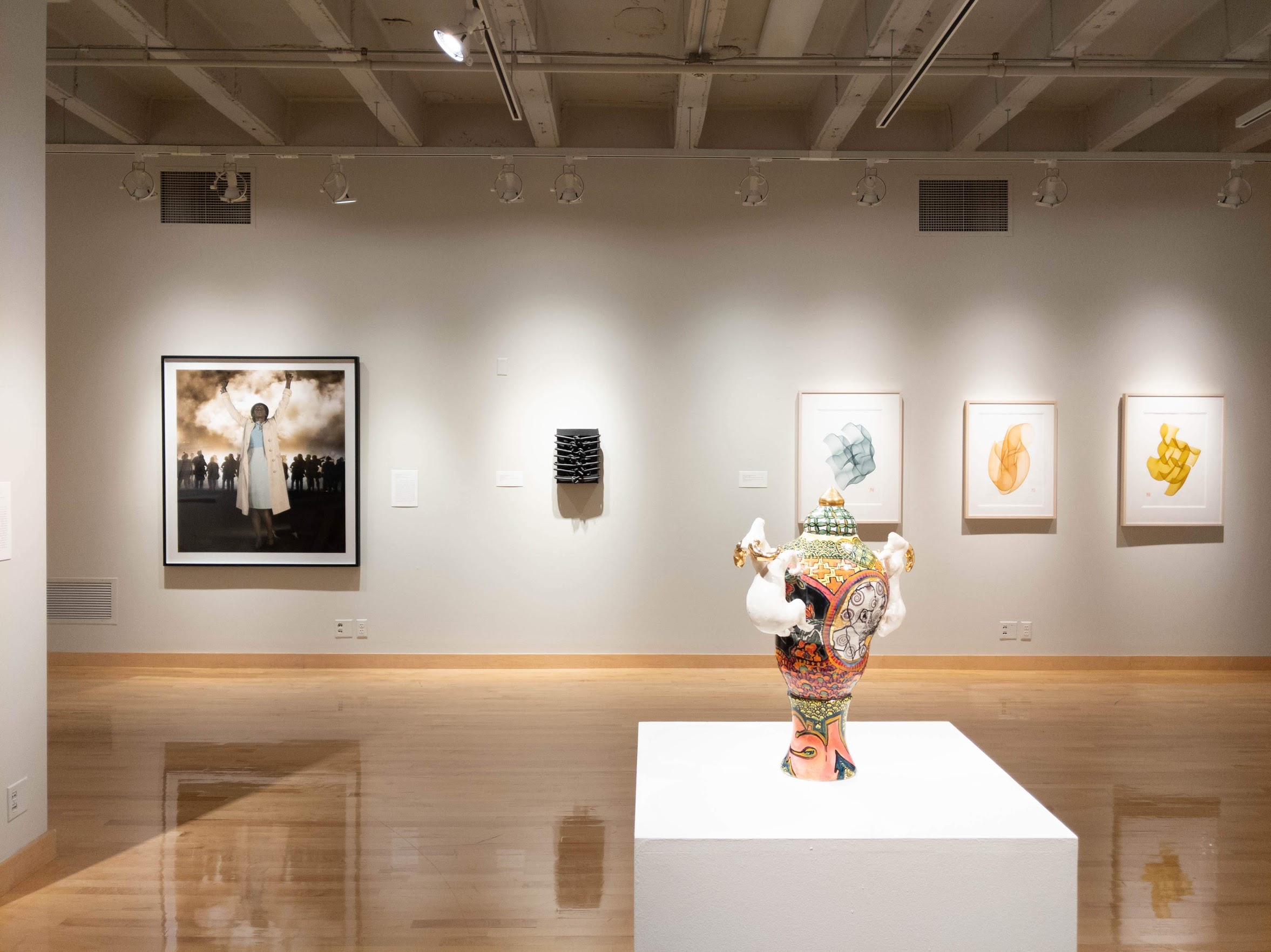
What is a museum? Why do they collect objects? Who chooses what is collected, and how do they decide? Entitled 20/20 Vision, a term used to express the clarity of vision, this exhibition strove to reveal the collecting practices, processes, and occasional predicaments that have shaped Flaten Art Museum’s collection. Bringing together works by both locally and internationally recognized artists, this exhibition spotlit acquisitions from the last five years. These exceptional examples of art have been acquired through the generous donations of several individuals who have dedicated funds for acquisitions and shared their personal collections with us and future generations.
This exhibition was curated by Jane Becker Nelson with Mona Weselmann and contributions from Madi Duran ’20 and Megan Vikla ’21.
Museum Pro Tips
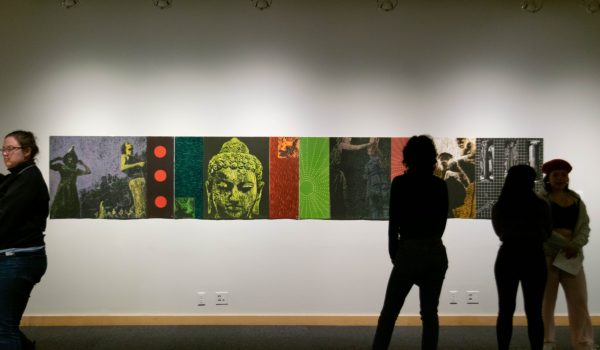
Have you ever looked closely at exhibition labels and wondered what the information means? They succinctly offer a great deal of information about the objects on display. Most follow the formula described here:
- The artist’s name is listed first, in bold letters followed by the artist’s nationality and life dates in parentheses.
- The title is in italics on the second line, followed by the year the work was completed.
- The medium, or material the object was made from, is recorded on the third line.
- The credit line, naming the donor or lender is entered next. This explains how the artwork became part of the collection or who is lending the work.
- If the museum owns the artwork, the accession number, a unique identifier assigned to the object, is last.
A bequest is a gift from a deceased person that passes to the museum. The museum may or may not know of the bequest in advance. It is not mandatory the museum accept the gift but it is important to know that transfer of title to the museum is not final until the estate has gone through probate. This court-supervised process verifies the person’s will and includes valuing their assets, paying final bills and taxes, and distributing the remainder of the estate.
For example, when Richard Tetlie ’43 passed away in 1999, he left a substantial bequest to Flaten Art Museum. He hoped his collection would be enjoyed by future Oles and scholars from around the world.
This can be very confusing! Let’s try to clear it up.
An acquisition is something obtained by the museum by gift, bequest, purchase, or transfer. Acquisition does not mean that a transfer of ownership has taken place.
An accession is an acquisition that a museum formally adds to its collections. Accessioning is the process of transferring ownership. Steps include assembling documentation about the object, cataloging essential object details, and gathering information about the artist.
Deaccessioning is the process of removing accessioned objects from a museum’s collection. Sometimes an artwork no longer fits the museum collecting objectives, it duplicates other work, it is deteriorated beyond reasonable conservation efforts, or staff may discover that the item was stolen, illegally imported, exported, or forged. Deaccessioning is a serious matter and guided by a professional code of ethics. Careful deliberation, written justification, and thorough documentation are essential before an item is sold, transferred, donated, or disposed.
Click on a work of art to explore the interpretive text.


You must be logged in to post a comment.